



































Chandra Grahan 2026: Exact Date and Time in India with Astrological Importance
Chandra Grahan 2026: Check the exact date and time in India, Sutak period details, and astrological importance of the Lunar Eclipse 2026. Know rituals and impact.

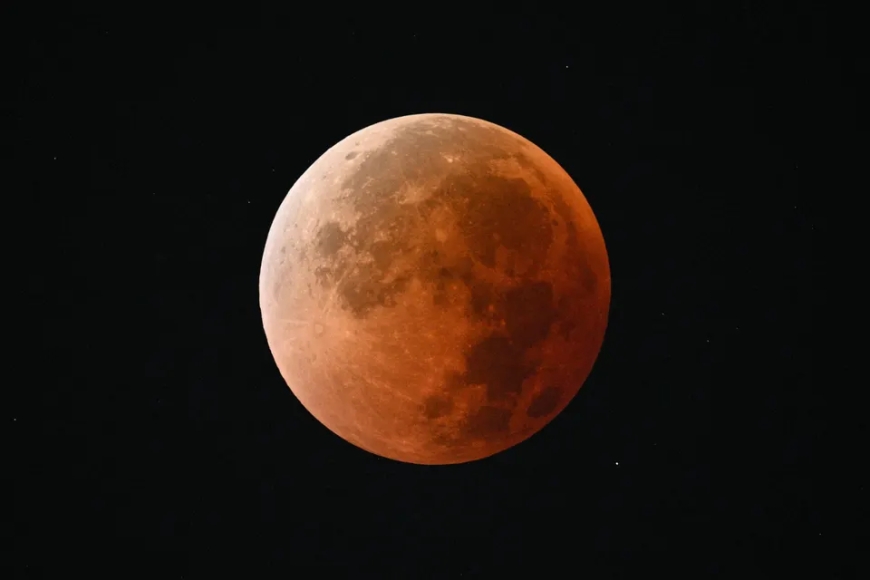


The full worm moon will pass through Earth's shadow on March 2 and 3, 2026, and for 58 minutes, it will be a "blood moon" during the last total lunar eclipse that can be seen from anywhere on Earth until late 2028. That will only be visible in North America, the Pacific Region, Australia, New Zealand, and East Asia. However, people all over the world will see the full moon rise near sunset on Monday, March 2, at their local time.
A full moonrise in March 2026 is like something out of a textbook, and a total lunar eclipse happens a few hours later. The almost full worm moon will rise into the night sky on Monday, March 2, at dusk. The full worm moon is the third and last full moon of winter in the Northern Hemisphere. It gets its name from the thawing ground and the return of earthworms in the spring.
What does it mean when there is a "blood moon" total lunar eclipse?
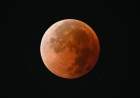
The moon will pass completely through Earth's shadow hours after it rises on March 3 in North America. This will cause a rare total lunar eclipse, which is also called a "blood moon" because the moon's disk turns a copper-reddish color. People in North America will be able to see this eclipse, but the best view will be from the western states.
The next total lunar eclipse will happen on New Year's Eve 2028, but the next one that can be seen from North America won't happen until June 26, 2029.
The Best Time to Watch the Full "Worm Moon" Rise
The worm moon will rise best on Monday, March 2, 2026, the night before the eclipse, even though the eclipse happens at night. This is when the moon's timing is best with sunset, making the moonrise this month the most beautiful and photogenic. Find out when the moon will rise in your area.
MORE FOR YOU
Full List of 2026 Actor Awards Winners
Hints and answers for the NYT Mini Crossword for Monday, March 2
WWE Danhausen Reveal: Here's Why He Was Booed at Elimination Chamber
In New York City, the sun set at 5:48 p.m. EST and the moon rose at 6:13 p.m. EST. This gave the moonrise a 25-minute gap, which was right in the blue hour, the best time for color and scale.
Los Angeles: The sun sets at 5:49 p.m. PST and the moon rises at 6:34 p.m. PST, which is about 45 minutes after the sun sets. This makes the rise darker but still dramatic.
When the full moon is in the sky, it rises much later, when the sky is already dark, and the horizon effect is less strong.
A Rare Total "Blood Moon" with Exact U.S. Times
The full moon will pass completely into Earth's darkest shadow on Tuesday, March 3, 2026, in the early morning hours. Here are the exact times of totality, when the moon will look completely copper-red, for each U.S. time zone:
Eastern Time: 6:04–7:02 a.m. EST (the moon will set during totality for many places in the east)
5:04 to 6:02 a.m. CST in Central Time
Mountain Time: 4:04 to 5:02 a.m. MST
Pacific Time: 3:04-4:02 a.m. PST
Alaska AKST: 2:04–3:02 a.m.
HST: 1:04–2:02 a.m.
When the moon is completely in Earth's shadow, it turns deep red and copper colors. This is the most dramatic part of the eclipse. The Eclipse App lets you see exactly what you'll see from any place.
The Different Stages of a Total Lunar Eclipse
When the Earth moves directly between the sun and a full moon, a total lunar eclipse happens. There are five stages, and the "blood moon" only appears in the middle stage, which is called totality.
Penumbral eclipse: The moon first enters Earth's faint outer shadow, which is called the penumbra, as it moves through Earth's shadow.
Partial eclipse: it then moves into the umbra, which is the darker middle shadow. You can see the outline of Earth's shadow moving across the moon's surface, making it darker and redder over time.
Totality: The whole surface of the moon is in the umbra, which makes it turn reddish-orange. The moon will only look brighter and redder when it is totally eclipsed.
The last two phases are the same as the first two, with a partial eclipse followed by a penumbral eclipse.
When to Watch the Shadow of the Earth Move Across the Moon
People who want to see more than just the deep red "blood moon" should also watch the partial lunar eclipse phases, when Earth's shadow clearly moves over the moon's disk. These phases show the curvature of Earth's shadow in space, which is a more subtle but scientifically interesting sight. The partial phase before totality is the best time to watch because the moon will be very low in the sky for many people after totality.
The first partial eclipse in the U.S. starts about 1 hour and 15 minutes before totality and ends about 1 hour and 15 minutes after totality.
Eastern Time (EST): about 4:49 to 6:04 a.m. EST (the second partial phase is not visible)
Central Standard Time (CST): around 3:49 to 5:04 a.m. CST (the second partial phase is not visible)
Mountain Time (MST): about 2:49 to 4:04 and 5:02 to 6:17 a.m. MST
Pacific Time (PST): about 1:49–3:04 and 4:02–5:17 a.m. PST
Alaska Time (AKST): about 12:49–2:04 and 3:02–4:17 a.m. AKST (March 2–3)
Hawaii Standard Time (HST): about 11:49 p.m. to 1:04 a.m. and 2:02 to 3:17 a.m. on March 2–3
During these times, the moon will slowly get darker on one side as it moves into Earth's shadow. After totality, this process will reverse. You can see it easily with the naked eye on clear days, but binoculars or a small telescope make it look even better.
Times for the "Blood Moon" Around the World
The eclipse will happen in the evening of March 3 in Australia, New Zealand, and East Asia. In New Zealand, it will happen just after midnight on March 4. For a lot of people, it will happen high up in a dark sky, which is the best time to see it. Here are the times for totality in your area:
Wednesday, March 4, from 12:04 to 1:02 a.m. in Auckland, New Zealand (NZDT)
Sydney, Australia (AEDT): Tuesday, March 3, from 10:04 to 11:02 p.m.
Brisbane, Australia (AEST): Tuesday, March 3, from 9:04 to 10:02 p.m.
Tuesday, March 3, from 9:34 to 10:32 p.m. in Adelaide, Australia
Tuesday, March 3, from 8:34 to 9:32 p.m. in Darwin, Australia
Tuesday, March 3, 7:04–8:02 p.m. in Perth, Australia
8:04 to 9:02 p.m. on Tuesday, March 3, in Tokyo, Japan
Tuesday, March 3, 8:04–9:02 p.m. in Seoul, South Korea
Beijing, China (CST): 7:04–8:02 p.m. on March 3
Tuesday, March 3, from 7:04 to 8:02 p.m. in Hong Kong (HKT)
In some parts of Southeast Asia, totality will start before the moon rises, which will dull the dramatic color difference.
Is it safe to see a total lunar eclipse called a "blood moon"?
You can safely watch all parts of a lunar eclipse with your bare eyes. A lunar eclipse is just sunlight that is reflected off the moon and fades and turns red. A solar eclipse, on the other hand, needs certified eye protection. You don't need any filters to see it with your own eyes, binoculars, or a telescope.
"This reddish light comes from all the sunrises and sunsets around the edge of the Earth at that moment. It is sunlight that has skimmed through the Earth's atmosphere and been refracted, or bent, by the atmosphere into the umbra," said Meg Thacher, Associate Editor at Sky & Telescope.
Background
In 2026, there will be 13 full moons, including the worm moon. This is because the lunar year is about 11 days shorter than the solar year. Three of those will be supermoons: Jan. 3, Nov. 24, and Dec. 24. A supermoon happens when the full moon is very close to perigee.
There will also be two lunar eclipses in 2026. There will only be one total lunar eclipse this year, on March 2 and 3. The second one, on August 27 and 28, will be a very deep partial lunar eclipse, with 96% of the full moon moving through Earth's shadow. A "ring of fire" annular solar eclipse on February 17, just two weeks before the worm moon, marked the start of an unusually busy eclipse season.
Hope you have clear skies and big eyes.
What's Your Reaction?
 Like
0
Like
0
 Dislike
0
Dislike
0
 Love
0
Love
0
 Funny
0
Funny
0
 Angry
0
Angry
0
 Sad
0
Sad
0
 Wow
0
Wow
0