



































Budget 2026–27 Highlights: Growth, Tax Changes & Vision Ahead
Explore the key highlights of India’s Union Budget 2026–27, including economic growth plans, major tax changes, and the government’s long-term vision for development.

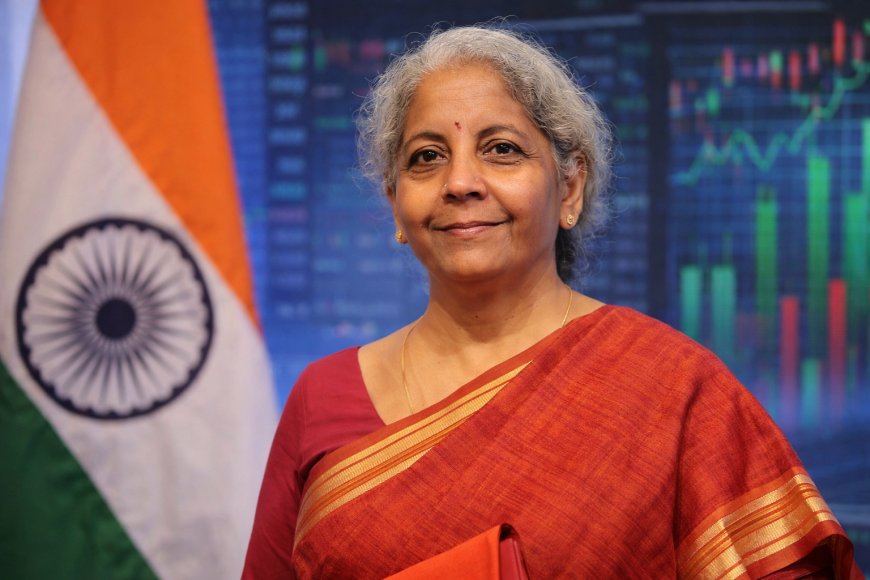


Finance Minister Nirmala Sitharaman presented the Union Budget for the financial year 2026–27 earlier today, February 1, 2026 in Parliament. The Budget is framed against a backdrop of global economic uncertainty, supply chain realignments, and evolving investment dynamics, while reaffirming India’s focus on sustained growth and fiscal discipline.
While presenting the Budget, the finance minister stated that the government aims to “transform aspiration into achievement and potential into performance.” She described this year’s Budget as a Yuva Shakti–driven Budget with proposals emphasising the strengthening of domestic manufacturing, scaling high-growth services, and reinforcing infrastructure as key drivers of long-term economic expansion.
The finance minister described this year's budget as Yuva Shakti-driven, with proposals emphasizing the strengthening of domestic manufacturing, scaling high-growth services, and reinforcing infrastructure as key drivers of long-term economic expansion. She said during the budget presentation that the government aims to "transform aspiration into achievement and potential into performance."
The finance minister added, "We have pursued far-reaching structural reforms, fiscal prudence, and monetary stability while maintaining a strong thrust on public investment," in reference to the nation's current growth trajectory. "We have ensured that citizens must benefit from every action of the Government, undertaking reforms to support employment generation, agricultural productivity, household purchasing power, and universal services to people," she added, citing Atmanirbharta as a guiding principle. "We have built domestic manufacturing capacity, energy security, and reduced critical import dependencies."
In order to draw in long-term capital and strengthen India's integration with international markets, this year's Union Budget emphasizes the significance of regulatory certainty, ease of doing business, and targeted reforms.
Let's examine the Union Budget 2026–2027's main areas of focus:
Budget theme
- Yuva Shakti–driven growth: Converting India’s demographic dividend into productive capacity through skilling, employment, and enterprise creation.
- Three Kartavya (duties) guiding this year’s Budget
- Accelerating and sustaining economic growth by enhancing productivity, competitiveness, and resilience amid volatile global dynamics.
- Fulfilling aspirations and building capacity by strengthening human capital, skills, and institutional capabilities.
- Advancing Sabka Sath, Sabka Vikas by ensuring equitable access to opportunities across regions, communities, and sectors.
- Investment-led development focus
- Scaling manufacturing in strategic and frontier sectors.
- Strengthening MSMEs as growth partners and supply-chain anchors.
- Reinforcing services as a core driver of growth, employment, and exports.
- Strengthening India’s investment ecosystem
- Sustained public capital expenditure to crowd in private investment.
- Infrastructure-led regional development, especially in Tier II and Tier III cities.
- Long-term energy security, climate technologies, and resource resilience.
- Enhancing ease of doing business and capital flows
- Regulatory simplification, tax certainty, and trust-based compliance.
- Measures to improve FDI facilitation, portfolio investment, and global integration.
- Launch of an Investment Friendliness Index of States in 2025, aimed at promoting competitive cooperative federalism and encouraging states to strengthen policy frameworks, facilitation mechanisms, and investor responsiveness.
Manufacturing
Through targeted schemes, cluster-based development, and capacity expansion, the Budget aims to create an enabling environment for long-term industrial investment in India. Key initiatives to scale up manufacturing in strategic and frontier sectors include:
Biopharma SHAKTI Scheme
- To develop India as a global biopharma manufacturing hub through ecosystem-led capacity creation
India Semiconductor Mission (ISM) 2.0
- To expand India’s semiconductor capabilities across equipment, materials, design, and supply-chain resilience, with an enhanced outlay of ₹40,000 crore
Electronics Components Manufacturing Scheme
- Outlay to be increased to ₹40,000 crore to deepen domestic value addition and capitalise on rising investment momentum
Rare Earth Corridors
- Establishment of dedicated corridors in Odisha, Kerala, Andhra Pradesh, and Tamil Nadu to promote mining, processing, research, and manufacturing of rare earth materials
Chemical Manufacturing Infrastructure
- Support for States to establish three dedicated Chemical Parks on a cluster-based, plug-and-play model to strengthen domestic chemical production
Construction and Infrastructure Equipment (CIE)
- Introduction of a scheme to enhance domestic manufacturing of high-value and technologically advanced construction and infrastructure equipment
Container Manufacturing
- Launch of a dedicated Container Manufacturing Scheme with a budgetary allocation of ₹10,000 crore over five years to build globally competitive capacity
Rejuvenation of Legacy Industrial Clusters
- Introduction of a scheme to revive 200 legacy industrial clusters through infrastructure and technology upgradation to improve cost competitiveness and efficiency
Biopharma
The Union Budget 2026–27 places biopharmaceuticals at the centre of India’s strategy to scale up manufacturing in strategic and frontier sectors. To support the development of India as a global biopharma manufacturing hub, the Budget introduces a comprehensive framework to create an ecosystem, build capacity, and enable clinical research:
1. Biopharma SHAKTI
(Strategy for Healthcare Advancement through Knowledge, Technology & Innovation)
- Biopharma SHAKTI aims to develop India as a global biopharma manufacturing hub.
- The scheme will be launched with an outlay of ₹10,000 crore over the next five years.
- It will focus on building an ecosystem for the domestic production of biologics and biosimilars. The initiative will include the establishment of a biopharma-focused institutional network, comprising three new National Institutes of Pharmaceutical Education and Research (NIPERs) and the upgradation of seven existing institutes.
- A network of over 1,000 accredited clinical trial sites will be created to strengthen India's clinical research and development capabilities.
2. Institutional and Talent Capacity Development
- Establishment of three new national institutes and upgradation of seven existing institutes to strengthen advanced pharmaceutical education, research, and skills development.
- Alignment of academic and research capabilities with industry requirements and global benchmarks.
3. Clinical Research and Regulatory Infrastructure
- Creation of a network of 1,000 accredited clinical drug trial sites across the country.
- Strengthening of regulatory processes to improve approval timelines and enhance global acceptance of Indian-manufactured biopharma products.
Infrastructure
The Union Budget maintains a strong focus on public capital expenditure to support logistics efficiency, urban development, and industrial expansion, thereby crowding in private investment.
Key infrastructure-related initiatives include:
- Public capital expenditure of ₹12.2 lakh crore in FY27 to sustain momentum in infrastructure creation
- Development of seven High-Speed Rail corridors to strengthen inter-city connectivity and support economic agglomeration across major growth regions.
- Expansion of inland water transport through the operationalisation of 20 new National Waterways, improving logistics efficiency and connectivity between industrial clusters, mineral-rich regions, and ports.
- Continued focus on infrastructure development in Tier II and Tier III cities with populations exceeding 5 lakh, which have emerged as new growth centres
- Development of City Economic Regions (CERs), with an allocation of ₹5,000 crore per region over five years, to unlock agglomeration-led growth and strengthen urban economic clusters through a challenge-based, reform-linked financing model.
- Infrastructure-led regional development to support manufacturing clusters, services hubs, and urban economic regions
Textiles
The Union Budget 2026–27 reaffirms textiles as a priority labour-intensive sector with strong linkages to employment, exports, and regional manufacturing clusters. The Budget adopts an integrated approach to modernise traditional textile ecosystems, strengthen fibre self-reliance, and upgrade skills across the value chain. Key measures for the textile sector include:
Integrated Textile Programme comprising five components:
- National Fibre Scheme to support self-reliance in natural, man-made, and new-age fibres
- Textile Expansion and Employment Scheme to modernise traditional clusters through capital support for machinery and technology upgradation
- National Handloom and Handicraft Programme to integrate and strengthen existing schemes for artisans and weavers
- Tex-Eco Initiative to promote globally competitive and sustainable textiles and apparel
- Samarth 2.0 to modernise and upgrade the textile skilling ecosystem through industry and academic collaboration
These measures aim to enhance productivity, support value addition, and strengthen India's position in global textile and apparel markets.
Digital Infrastructure and Data Centres
The budget places digital infrastructure at the centre of India’s investment-led growth strategy, recognising data centres and cloud services as critical enablers of the digital economy, artificial intelligence, and next-generation services. The Budget signals long-term policy stability and regulatory certainty, supporting large-scale investments in data storage, processing, and digital service delivery.
Key measures to strengthen digital infrastructure and attract investment include:
- Tax holiday till 2047 for data centre operations
- Introduction of a long-term tax holiday for foreign companies providing cloud services using data centre infrastructure in India
- Intended to provide predictability and investment certainty for hyperscalers, cloud service providers, and digital infrastructure investors
- Applicable to data centre operations commencing on or before March 31, 2031
- Companies, however, need to provide services to Indian customers through an Indian reseller entity
- A safe harbour of 15% on cost to be provided if the company providing data centre services from India is a related entity
- Support for large-scale digital infrastructure development
- Reinforcement of India’s position as a preferred destination for data centre investments, supported by improving power availability, connectivity, and regulatory frameworks
- Alignment with growing demand from digital services, fintech, e-commerce, AI, and global capability centres
- Enabling ecosystem for digital and technology-driven services
- Strengthening the foundation for high-growth digital sectors, including cloud computing, artificial intelligence, analytics, and platform-based services
- Integration of digital infrastructure development with broader initiatives on ease of doing business, tax certainty, and investment facilitation
Champion SMEs and Micro Enterprises
Recognising MSMEs as a critical driver of employment, exports, and supply-chain resilience, the Budget introduces targeted measures to support their scale-up and formalisation.
Key initiatives include:
- Creation of Champion SMEs through targeted equity, liquidity, and professional support
- Enhanced access to capital and risk finance to support growth-oriented enterprises
- Introduced a dedicated ₹10,000 crore SME Growth Fund to create future Champions, incentivising enterprises based on select criteria
- A ₹2,000 crore top-up for the Self-Reliant India Fund, set up in 2021, to support micro enterprises and maintain their access to risk capital
AVGC and Creative Economy
The Budget recognises the growing role of the creative economy or the Orange Economy as a source of skilled employment and export potential. Key initiatives include:
- Support for the Animation, Visual Effects, Gaming and Comics (AVGC) sector, projected to require 2 million professionals by 2030
- Strengthening of creative talent pipelines through the establishment of AVGC Content Creator Labs in 15,000 secondary schools and 500 colleges, supported by the Indian Institute of Creative Technologies, Mumbai
Climate Technologies and Energy Transition
The Budget strengthens India’s commitment to climate action and industrial decarbonisation through targeted support for emerging clean technologies.
Key measures include:
- Carbon Capture Utilisation and Storage (CCUS)
- Proposed outlay of ₹20,000 crore over the next five years
- Focus on scaling CCUS technologies and achieving higher readiness levels across five industrial sectors: power, steel, cement, refineries, and chemicals
These initiatives aim to support India’s long-term energy security while enabling cleaner industrial growth.
Education, Skills and Services-Led Growth
The Union Budget 2026–27 reinforces the role of services as a core driver of growth, employment, and exports, supported by targeted institutional and skills-building interventions.
Key initiatives include:
- Establishment of a High-Powered ‘Education to Employment and Enterprise’ Standing Committee
- Focus on strengthening the services sector to achieve a 10% global share by 2047
- Rationalisation of taxation for IT services, including software development services, ITeS, KPO, and contract R&D, under a unified category of Information Technology Services with a common safe harbour framework
Tourism
This year’s Budget has adopted a comprehensive approach to strengthen tourism infrastructure, enhance skills development, and leverage digital platforms to improve visitor experiences and destination management. Key initiatives to strengthen the tourism sector include:
- Destination development and experiential tourism
- Development of 15 archaeological sites into vibrant, experiential cultural destinations through curated access and immersive interpretation
- Promotion of ecologically sustainable tourism, including mountain trails, turtle trails, and bird-watching trails across select regions
- Regional and niche tourism promotion
- Targeted initiatives to strengthen tourism circuits in emerging destinations, including heritage, spiritual, and nature-based tourism hubs
- Alignment of tourism development with regional infrastructure and connectivity initiatives
These measures aim to position tourism as a scalable economic activity that supports job creation, regional development, and investment opportunities across hospitality, transport, digital services and allied sectors.
Healthcare and Medical Value Tourism
The Budget emphasises strengthening healthcare services and positioning India as a global destination for medical value tourism.
Key initiatives proposed for strengthening the healthcare workforce include:
- Expansion of institutions for Allied Health Professionals (AHPs) to address skill gaps across critical disciplines
- Coverage of multiple healthcare roles, including diagnostics, clinical support, and behavioural health services
- Creation of a stronger talent pipeline to support both domestic healthcare needs and international patient services
Care Economy and Allied Health Services
- Development of a structured care ecosystem covering geriatric and allied care services
- Introduction of nationally aligned training programmes to support multi-skilled caregivers
- Intended to improve service quality, address demographic shifts, and generate employment across healthcare and care services
AYUSH and Traditional Medicine
Strengthening India’s traditional medicine ecosystem
- Establishment of new All India Institutes of Ayurveda
- Upgradation of AYUSH pharmacies and drug testing laboratories to improve certification and quality standards
- Enhancement of research, training, and global outreach for traditional medicine systems
Healthcare Infrastructure and Trauma Care
Expansion of emergency and trauma care capacity through
- Establishment of new institutions and upgradation of existing mental health and trauma care facilities
- Strengthening district-level healthcare infrastructure to improve access and resilience
Medical Value Tourism Hubs
Support for States to establish five Regional Medical Value Tourism Hubs in partnership with the private sector. These hubs are envisaged as integrated healthcare complexes, combining:
- Advanced medical and surgical services
- Medical education and research institutions
- Diagnostics, post-treatment care, and rehabilitation infrastructure
- Dedicated facilitation centres for international patients
Customs reforms
- Simplification of the customs tariff structure to support domestic manufacturing, promote export competitiveness, and correct duty inversion.
- Phased removal of long-standing customs duty exemptions on items manufactured domestically or where imports are negligible.
- Incorporation of effective rates from customs notifications directly into the tariff schedule to improve transparency and certainty for businesses.
- Expansion of duty-free and concessional duty provisions to support export-oriented sectors, including marine products, leather, textiles, electronics, and energy transition technologies.
- Enhanced trust-based customs systems, including extended duty deferment periods and greater facilitation for authorised and compliant importers, to enable faster clearance and reduced transaction costs.
- Measures to improve customs processes through automation and risk-based assessments, supporting smoother movement of goods across borders and strengthening India’s trade facilitation framework.
Tax Reforms
- Introduction of a simplified and modernised Income Tax framework, with redesigned rules and forms to reduce compliance complexity and improve ease of filing.
- Tax holiday till 2047 for foreign companies providing cloud services using data centre infrastructure in India, aimed at strengthening India’s position as a global data centre and digital services hub.
- Measures to reduce litigation and improve trust-based tax administration, including rationalisation of penalties, decriminalisation of minor offences, and integration of assessment and penalty proceedings.
- Extension and rationalisation of safe harbour provisions, particularly for Information Technology and IT-enabled services, to provide greater certainty on transfer pricing and tax outcomes.
- Targeted tax measures to support manufacturing, services, and export-oriented sectors, including incentives for data centres, cloud services, toll manufacturing, and bonded warehousing.
- Reforms to support foreign investment and global mobility, including exemptions and simplified tax treatment for non-resident experts and foreign service providers operating from India.
- Rationalisation of customs and indirect tax provisions to support energy transition, critical minerals, electronics manufacturing, and export competitiveness.
- Continued emphasis on predictability, transparency, and stability in the tax regime, aimed at improving India’s overall investment climate and long-term investor confidence.
What's Your Reaction?
 Like
0
Like
0
 Dislike
0
Dislike
0
 Love
0
Love
0
 Funny
0
Funny
0
 Angry
0
Angry
0
 Sad
0
Sad
0
 Wow
0
Wow
0