
































The Ministry of Labour sends out draft rules for four Labour Codes
The Ministry of Labour has released draft rules for the four Labour Codes, inviting stakeholder feedback on wages, social security, industrial relations, and safety

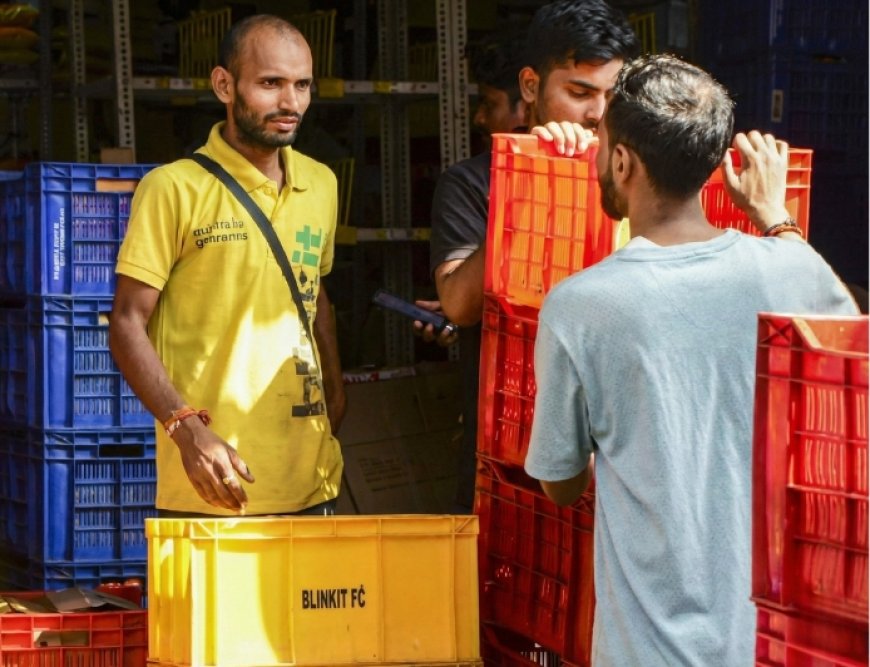


The new draft rules for the Code on Wages let governments set the normal work hours, which are now set at eight hours. This has made labor economists and workers' representatives worried that private employers will take advantage of workers.
On Tuesday, the Ministry of Labor and Employment released the new draft rules for all four labor laws that were passed in 2019 and asked for feedback. This was after protests from workers' groups stopped the implementation of the previous draft rules from 2020.
Some people said that the new draft rules for the Code on Wages were worse than the old draft rules or the Minimum Wage Act of 1948 in some ways.
The old draft, like the 1948 Act, said that people should work nine hours a day with an hour off for changeovers, tea, rest, bathroom breaks, and other things. This was in line with the International Labour Organisation's convention on eight-hour days and 48-hour weeks, which India signed.
The new draft rules don't say how many hours a day workers can work. It's up to the Centre (and the state governments, since labor is a concurrent subject) to let people know. Labor economists and activists said that this rule would let governments set working hours of 10 to 12 hours a day, which would make the growing gig and platform workforce more open to abuse.
They said this would happen even though the new draft rules for the Occupational Safety, Health, and Working Condition Code still say that workers should work 48 hours a week.
Critics said that, for example, daily wage workers could be made to work 12 hours a day for four days, with a new group of workers taking over for the rest of the week.
Critics said that gig workers, like food delivery people or cleaners or barbers sent to private homes by the platforms that hire them, can also be made to work longer hours, which can make them tired and put their health at risk.
Factory workers who are paid weekly or monthly can be made to work long hours on certain days without getting paid extra, which is required by law. On other days, they can get a few extra hours of rest to meet the 48-hour weekly norm.
The new draft rules say, "The number of hours of work that will make up a normal working day, including one or more specified breaks, will be as per general or special order, issued from time to time."
Most of the time, the states follow the central rules, but they make small changes.
The ministry has also sent out new drafts of the rules for the Industrial Relations Code and the Social Security Code. All of the current labor laws are covered by the four new ones.
Shyam Sundar, a labor economist and adjunct professor at the Management Development Institute in Gurgaon, said that the ministry should have made it clear that the eight-hour workday is the global standard.
👉 Read more: https://headlinesxp.com/india-deals-with-the-biggest-change-to-its-labour-laws-in-decades
"The government has set 48 hours as the weekly working hours, but the state governments can take advantage of the fact that the daily work hours are not clear and may require up to 12 hours of work a day," he said.
"Setting the weekly hours of work and leaving the daily hours of work to notifications makes it hard for both employers and workers to plan and manage."
According to Nirmal Gorana, national coordinator of the Gig and Platform Services Workers Union, gig workers are the most exploited and would be even more vulnerable if the work hours were lengthened.
"Even now, a lot of platforms make their workers work more than eight hours a day." He said, "The government wants to help businesses get people to work 12 hours a day." "This will have an effect on their health and drive."
An anonymous labor economist said that some states had relaxed the eight-hour workday rules during the pandemic by using their emergency powers. But now the relaxation can happen all the time, even when there isn't an emergency.
He said, "The low-level workers, like day laborers and gig workers, need protection, but they will be more vulnerable."
What's Your Reaction?
 Like
0
Like
0
 Dislike
0
Dislike
0
 Love
0
Love
0
 Funny
0
Funny
0
 Angry
0
Angry
0
 Sad
0
Sad
0
 Wow
0
Wow
0