
















Trump Approves 500% Tariff on Russian Oil Before Ambassador’s Arrival, Exits India-Backed ISA
Ahead of assuming office on January 12, 2026, U.S. envoy-designate Sergio Gor calls ending India’s Russian oil imports a key priority.

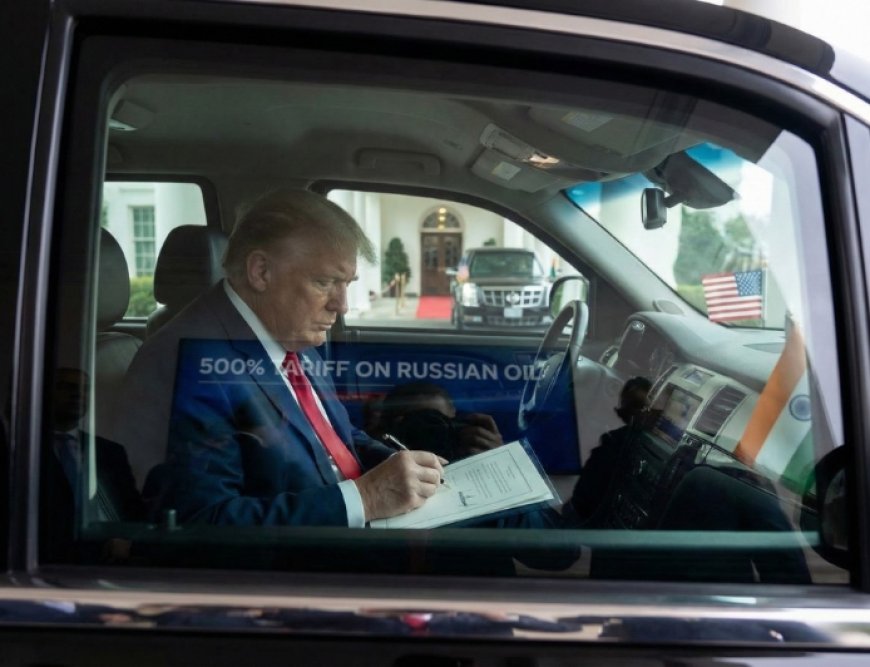


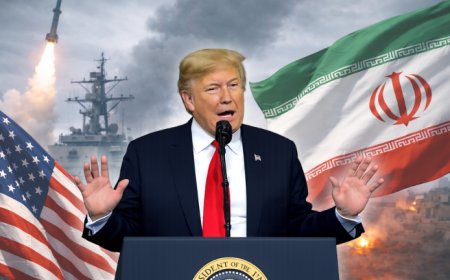
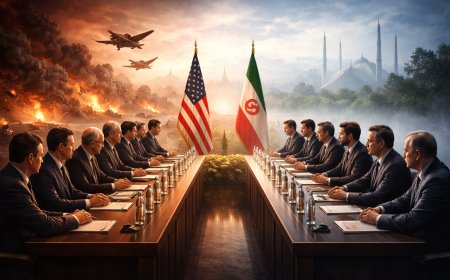
On Thursday, January 8, 2026, India was under double pressure when U.S. President Donald Trump decided to support a bill that would impose "500% tariffs" on countries that buy Russian oil and to pull the U.S. out of the International Solar Alliance (ISA), which India leads, along with dozens of other international organizations.
The announcements came just before U.S. Ambassador-designate Sergio Gor arrives in Delhi this weekend. In September, he said that making sure India stops buying Russian oil is a "top priority." Mr. Gor was confirmed and sworn in to the job months ago. He will start his job as Ambassador to Delhi and "Special envoy to South and Central Asia" on January 12, 2026. He is expected to give a speech to the public.
In Paris, Polish Foreign Minister Radoslow Sikorski said he was "satisfied" that India has cut back on oil imports from Russia. He said this during a press conference with External Affairs Minister S. Jaishankar and the Foreign Ministers of France and Germany.
"Relations between the European Union and strategic partners like India are very important to us, and I am happy that India is buying less Russian oil because it is funding [Russian President] Putin's war machine," Mr. Sikorski said. Mr. Jaishankar, who spoke right after him, did not disagree.
U.S. Senator Lindsey Graham, who is a close friend of Mr. Trump, said in a statement that the President of the United States has "greenlit" the Russia Sanctions Bill, which could be voted on in Congress "as early as next week."
"This Bill would give President Trump a lot of power over China, India, and Brazil to get them to stop buying cheap Russian oil that pays for Putin's war against Ukraine."
The Russia Sanctions Act, a bipartisan bill that was introduced in the Senate in April, has 84 co-sponsors (out of 100 Senate members) and 151 co-sponsors in the U.S. House of Representatives. This means that it will likely pass easily when it comes up for a vote.
Earlier this week, Mr. Trump, who had spoken to the press with Mr. Graham, called it a "great legislation" that was coming. Mr. Graham said the Bill would give the U.S. President the power to set tariffs above the 25% penalty tariffs already in place on India.
Mr. Gor said during his Senate Foreign Relations Committee confirmation hearings in September that Mr. Trump had been "crystal clear" about India's oil purchases.
"They [India] need to stop buying oil from Russia. I think that almost everyone on this committee has signed on to Senator Graham's bill, which would put a 500% tax on buying and selling Russian oil. He went on to say that the President has only put a 25% tariff on imports so far, referring to the Russia Sanctions Act.
So, Mr. Gor's first job in Delhi will probably be to call for a complete halt to Indian oil imports from Russia, even though there are signs that these have already been cut back. This week, Reliance said that it hasn't received any shipments of Russian oil at its Jamnagar refinery since the beginning of December and doesn't expect to get any in January. This means that the company has stopped ordering the oil for now.
In November 2025, Indian PSUs bought a lot more Russian oil, but Reliance stopped all such imports and Nayara Energy, the other big importer under sanctions from western countries, can't import it either. So it's unlikely that India's Russian oil purchases will return to their previous levels. In 2018, India stopped buying oil from two important suppliers, Iran and Venezuela, because it was under similar pressure from the Trump administration.
The government didn't say anything about Mr. Trump's other choice, which was to leave ISA, an alliance started by India and France and based in Delhi with more than 90 members.
The alliance to promote solar power technology and use started in 2015 at the Paris COP Climate summit. An official statement said that the U.S. joining the alliance in 2021 would be a "big boost" to efforts to use solar energy around the world. The U.S. pulling out of the ISA, the UN Framework Convention on Climate Change, and more than 60 other UN and non-UN international agencies is being seen as a big blow to multilateralism and especially to global efforts to fight climate change and increase renewable energy.
What's Your Reaction?
 Like
0
Like
0
 Dislike
0
Dislike
0
 Love
0
Love
0
 Funny
0
Funny
0
 Angry
0
Angry
0
 Sad
0
Sad
0
 Wow
0
Wow
0