


























India deals with the biggest change to its labour laws in decades.
India implements the biggest labour law reform in decades, aiming to simplify regulations, protect workers’ rights, and boost employment and business compliance.



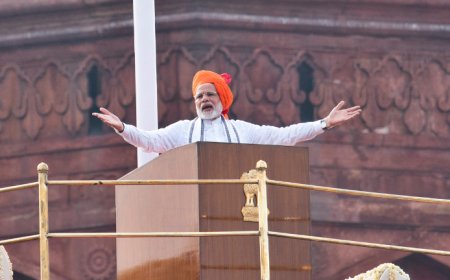
Indian businesses and states are scrambling to adjust to the sudden change in labour laws that Prime Minister Narendra Modi called one of the biggest changes since the country became independent from Britain in 1947.
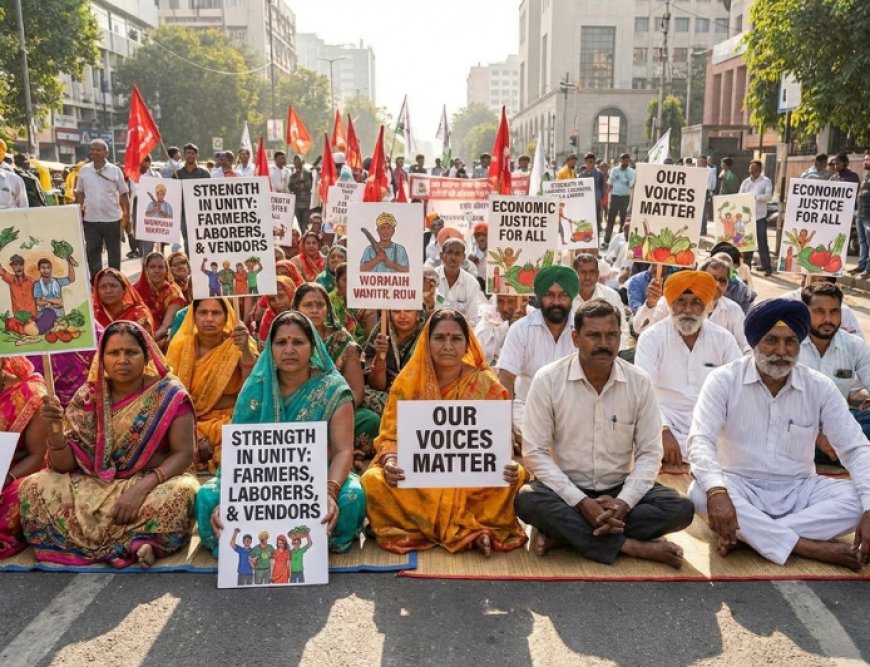
Unions organised protests in a number of states and in New Delhi after the government suddenly passed four new laws at the end of last month. These laws combined and updated 29 older laws, some of which date back to the colonial era.
The rules are meant to make the huge informal sector more official. They do this by getting rid of gig contracts, expanding social security to cover India's more than 10 million gig workers, and setting a "statutory floor wage" as the minimum salary. The rules will also get rid of rules that make it hard to hire women for some jobs and give employees free health check-ups once a year.
Tapan Sen, general secretary of the Centre of Indian Trade Unions, which has about 7 million members, said the reform will "totally demolish labour rights" because it makes it easier for companies to hire and fire workers. For example, the threshold for companies needing government approval to lay off workers will go from 100 to 300.
"We are going to fight the government head-on on this," he said, adding that unions could call for a general strike.
The Joint Platform of Central Trade Unions, a left-wing and opposition group of Indian unions, called it a "deceptive fraud" by Modi.
Modi's government is promoting the reform as a chance for India's workers, even though it was first passed in 2019 and 2020 but implementation was delayed because of opposition. This is because Modi is focused on helping the economy withstand punitive US tariffs.
"We will now start getting the benefits of social security programs," said Shaik Salauddin, who started two gig workers' unions with more than 70,000 members. He had been pushing the central government to improve working conditions for workers.
The new rules, which cut the number of existing rules from 1,400 to 350 and replaced compliance paperwork with a single licence, could make things more expensive for businesses, especially small and medium-sized ones.
Rajiv Chawla, head of the JaiRaj Group, which makes plastic parts for cars, said that the reform makes it easier for big companies to follow the rules but "for the SME sector it has a financial impact." Entrepreneurs will have to pay more because of the new rules.
"This will be good for the informal sector, but it will be too expensive for the formal sector. It won't be much for the big guys, but it will be good for the small and medium ones," said a senior manager at an auto parts maker.
The government hopes that the changes will help the economy. Even though big companies like Apple have invested a lot of money in "Make in India," manufacturing's share of GDP has stayed at about 14% since Modi took office in 2014. This is far short of the 25% goal he set for 2025.
Ashwin Chandran, head of the Confederation of Indian Textile Industry, said that "further simplification, reduction in compliance costs, and more alignment with international labour norms and wage costs" will be very important because "states with more industry-friendly provisions will attract more investment and jobs."
Chandrajit Banerjee, who is in charge of the Confederation of Indian Industry, said that the reform "strengthens the foundations for higher productivity." Nasscom, the trade group for the IT industry, says that business leaders want the new rules to go into effect without any problems.
Tanvee Gupta Jain, an economist at UBS, thinks that as many as 25 of India's 29 states have included parts of the reform. Some places, like Kerala, which is run by the Communist Party of India, haven't followed the new rules yet.
Vasudevan Sivankutty, Kerala's labour minister, said, "At this point in time, most states have made rules based on the new codes, except for Kerala." "The Kerala government promises that the rights of workers will be protected."
What's Your Reaction?
 Like
0
Like
0
 Dislike
0
Dislike
0
 Love
0
Love
0
 Funny
0
Funny
0
 Angry
0
Angry
0
 Sad
0
Sad
0
 Wow
0
Wow
0