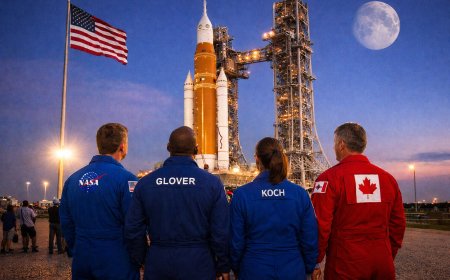






































"What a journey"—The Artemis II crew splashes down safely, completing humanity's first lunar voyage
Four brave astronauts return home safely after completing humanity's most thrilling journey to the Moon in over half a century. A moment for the ages.

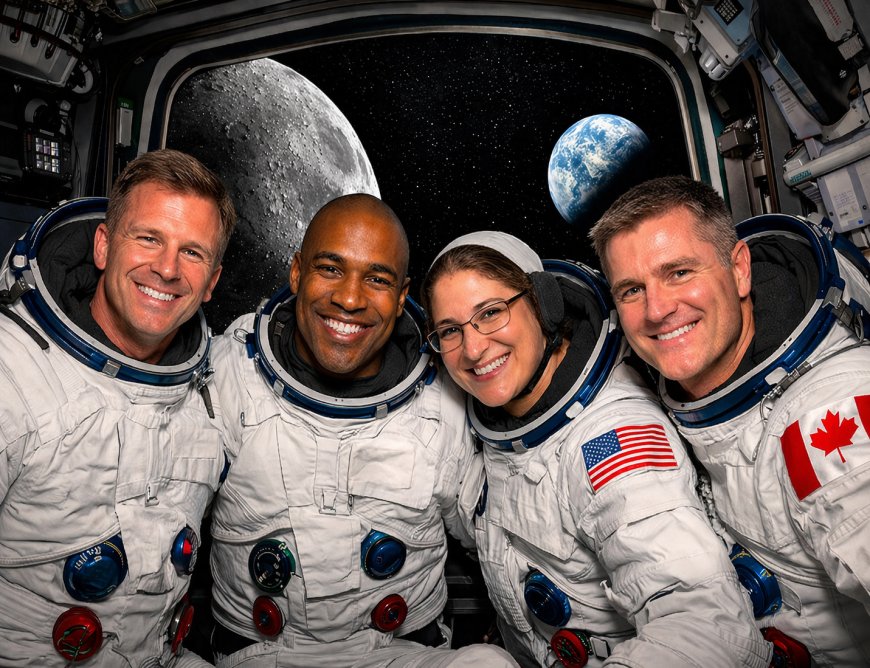


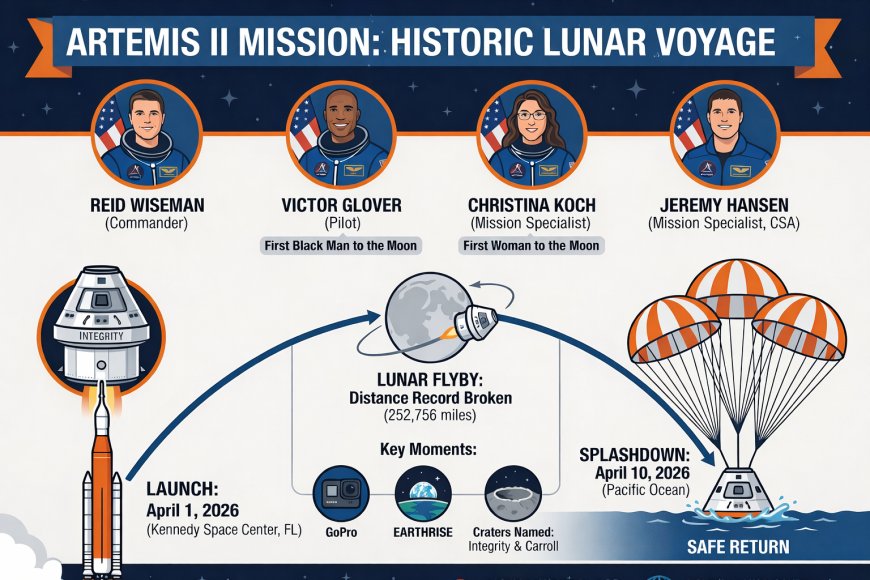
The four crew members, who included NASA astronauts Reid Wiseman, Victor Glover, and Christina Koch as well as Canadian astronaut Jeremy Hansen, returned safely to Earth in the Pacific Ocean on April 10, 2026, after their historic voyage around the moon. On launch day, April 1, the Artemis II crew departed from Florida in pursuit of the objective of undertaking the first manned journey to the moon since nearly half a century.
Four Astronauts, One Destination: The Moon
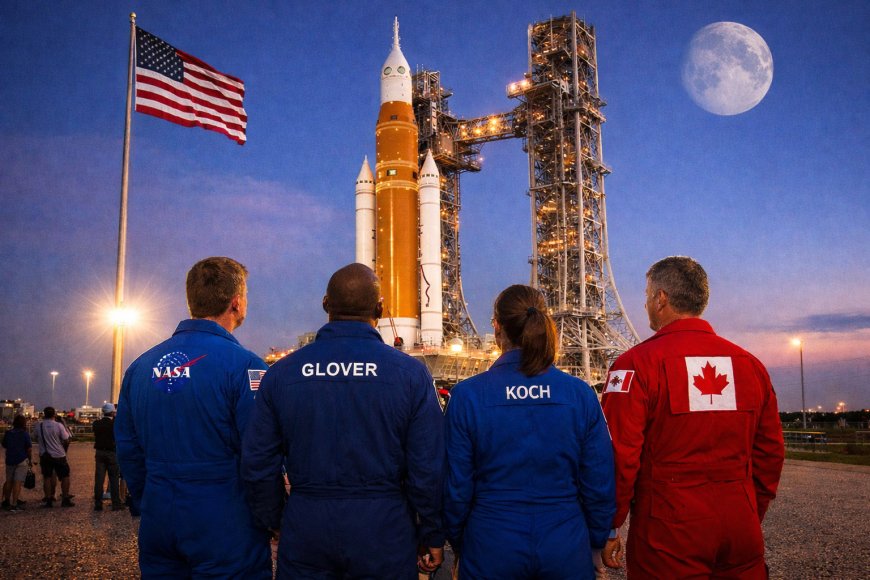
The launch of the Artemis II mission took place on April 1, 2026, at the Kennedy Space Center in Cape Canaveral, Florida, and was one of the most exciting events in space exploration history. The astronauts of this mission, namely Reid Wiseman, Victor Glover, Christina Koch, and Jeremy Hansen, were riding on board the Orion crew capsule, which was a little bit bigger than an SUV.
A Team of First-Time Achievers
It wasn’t just another space trip; it was a historic moment for diversity. Christina Koch became the first female astronaut to reach the Moon, while Victor Glover became the first Black man to go there. Jeremy Hansen was the first non-American to join the crew. For years, it was exclusively white American males who went to the Moon during NASA’s Apollo missions.
The Voyage and Milestone Events
Within the span of 10 days, the astronauts managed to achieve incredible results. They broke the record for distance traveled during the Apollo 13 mission in 1970, which equaled 252,756 miles (406,771 km). Throughout the mission, NASA released some of the most amazing photos, videos recorded on the GoPro camera, and even live broadcasts, making sure the whole world was watching every step of the way.
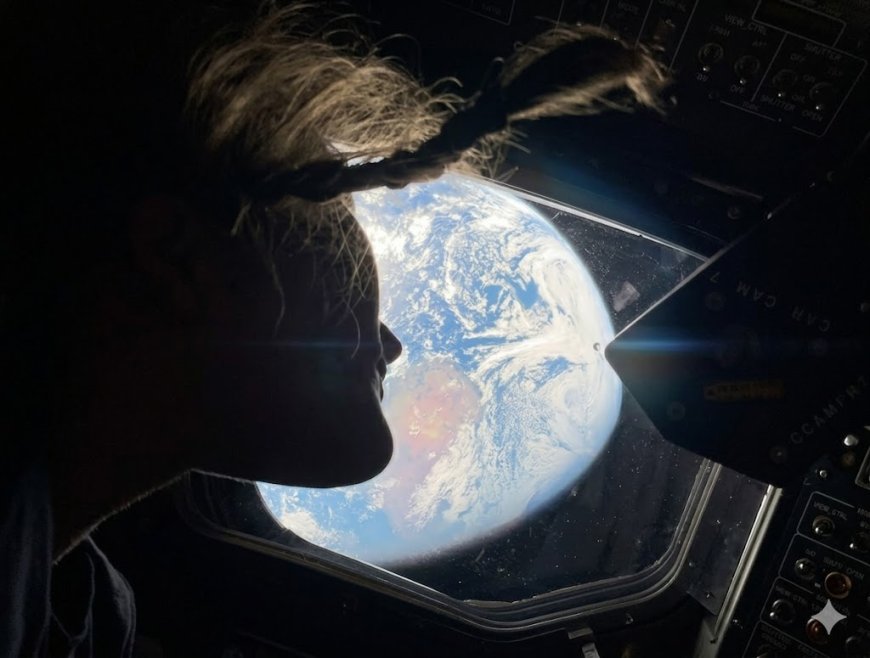
Among other things the astronauts got to witness during the lunar flyby were some truly spectacular sights, such as meteorite hits, the eclipse of the sun created by the moon's movement in its orbit, and Earth setting behind the moon. Astronaut Victor Glover best described the feeling: "Humans have not evolved to be able to see what we've seen here. It's very difficult to articulate because it's really quite amazing."
A Heartfelt Human Touch
But for all the science and the spectacle, there were also deeply personal touches involved in the mission. Prior to the fly-by of the moon, the Canadian astronaut named Jeremy Hansen asked permission to name two craters on the moon, with one named after the spaceship called Integrity and another named after the late wife of Commander Wiseman, whose name is Carroll. Carroll was a neonatal nurse, and she succumbed to cancer in 2020.
Safe Return to Earth
However, getting back home was a challenge. Engineers at NASA modified the entry route after they observed unexpected stress in the Orion heat shield during the 2022 test. It all proved successful when, on April 10, 2026, the Orion capsule, named "Integrity," made its descent into the earth's atmosphere and landed in the Pacific Ocean just off the coast of southern California around 5 PM PT.
Significance
Artemis II was a journey to the Moon and paved the way for a safe human landing this decade. The last such landing took place in 1972 during Apollo 17. In addition to that, it was the beginning of the process of establishing a permanent human presence on the Moon. During times of fear and mistrust towards institutions, the journey provided people with a sense of unity, awe, and hope in something beyond what they usually experience in their everyday lives.
What's Your Reaction?
 Like
0
Like
0
 Dislike
0
Dislike
0
 Love
0
Love
0
 Funny
0
Funny
0
 Angry
0
Angry
0
 Sad
0
Sad
0
 Wow
0
Wow
0