





































India Enters New Tax Era: Income Tax Act, 2025, Officially Takes Effect in April 2026.
India's new Income Tax Act, 2025, simplifies rules, cuts TCS, raises STT, and boosts data centers from April 2026.

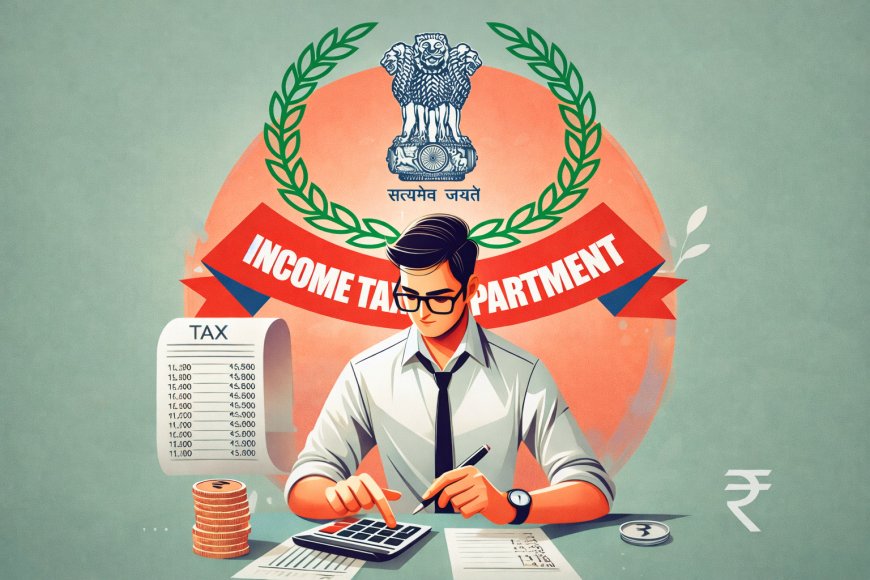


The new income tax law, applicable from April 1, 2026, brings in the 2026-27 financial year with significant changes, including a higher STT rate for F&O trades, a lower TCS rate for overseas tour packages, and a change in the rules for remitting funds through the Liberalized Remittance Scheme for medical and educational purposes.
New Tax Act Simplifies Filing Rules
The Income Tax Act, 2025, is to replace the 1961 act with effect from April 1, 2026, and is designed to simplify the tax rules and make them easy to read and understand. The e-filing platform will allow for filing based on both the old and new acts, and assessment and appeals for previous years will continue to be governed by the old act. The new act also includes safe harbor rules for software firms and a 20-year tax holiday until 2047 for foreign firms that purchase Indian data center services.
For taxpayers filing returns for the 2026-27 assessment year in July 2026, the old act forms will be used, and for those making advance tax payments starting June 2026, the new act rules will apply. The new act also abolishes the assessment year/previous year classification and introduces a unified tax year system, and TDS refunds are available even if the ITR is filed late without any penalty.
F&O Trading Gets Costlier April 1
Trading in futures and options (F&O) will become costlier from April 1, 2026. The government has increased the Securities Transaction Tax (STT), a nominal charge imposed on every trade, on futures from 0.02 percent to 0.05 percent and on options from 0.1 percent to 0.15 percent. To put it simply, every trade in F&O will attract a higher tax from next month. This has apparently been successful in deterring traders from risky and speculative bets in stock markets and protecting small investors from huge losses. This initiative has resulted in a decline in the overall number of individual F&O traders from 1.06 crore in FY25 to 75 lakh by December 2025.
TCS Cut, Data Centres Win
A report by Sebi found that individual investors have lost over ₹1.05 lakh crore in F&O trades in FY25. The government is reducing the burden on the Indian middle class by slashing the Tax Collected at Source (TCS) on overseas tour packages from 20% to 2% and on medical and education remittances from 5% to 2%. The cost of sending remittance for education and medical purposes is now reduced significantly for the average Indian citizen.
Domestic data centers are offered a 20-year tax holiday, and they can now serve global clients without the burden of the government taxing their foreign income. Both global companies and Indian data centers are treated equally, whether they are setting up their own data centers or using the services provided by the data centers in the country. The data center industry is expected to flourish in the country with its 25.17% corporate tax rate.
Important Structural Modifications
-
Consolidated Framework: With 536 sections (down from 819) and 23 chapters (down from 47), the Act has a more condensed structure.
-
New Terminology: A single, cohesive "Tax Year" will take the place of the distinct ideas of "Previous Year" and "Assessment Year" starting on April 1.
-
Simplified TDS: In Section 393, all Tax Deducted at Source (TDS) provisions for non-salary payments are combined into a single, tabular section.
-
Digital Integration: New clauses define Virtual Digital Space precisely and expand the definition of Virtual Digital Assets (VDAs) to include a variety of cryptographic and fintech assets.
Significant Form and Compliance Modifications
-
Renumbered Forms: As of the 2026–2027 tax year, numerous standard forms have been replaced:
-
-
Form 130 replaces Form 16 (Salary TDS).
-
-
-
Form 168 takes the place of Form 26AS/AIS (Annual Tax Statement).
-
Form 121 is created by combining Forms 15G and 15H.
-
The 3CA, 3CB, and 3CD audit reports are combined into a single Form 26.
-
-
Transition Rules: Even if an ITR is filed after April 2026, it will still adhere to the 1961 Act regulations for the transition year (FY 2025–2026).
-
Expanded Audit Roles: Company Secretaries (CS) and Cost and Management Accountants (CMA) are now permitted to perform specific tax audits in addition to Chartered Accountants (CAs).
What's Your Reaction?
 Like
1
Like
1
 Dislike
0
Dislike
0
 Love
0
Love
0
 Funny
0
Funny
0
 Angry
0
Angry
0
 Sad
0
Sad
0
 Wow
0
Wow
0