






































India’s Space Startup GalaxEye Launches ‘Drishti,’ the World’s First OptoSAR Satellite
GalaxEye launches Drishti, the world's first OptoSAR satellite, combining optical and SAR imaging technologies to deliver all-weather, day-and-night Earth observation from a single Indian-built spacecraft.

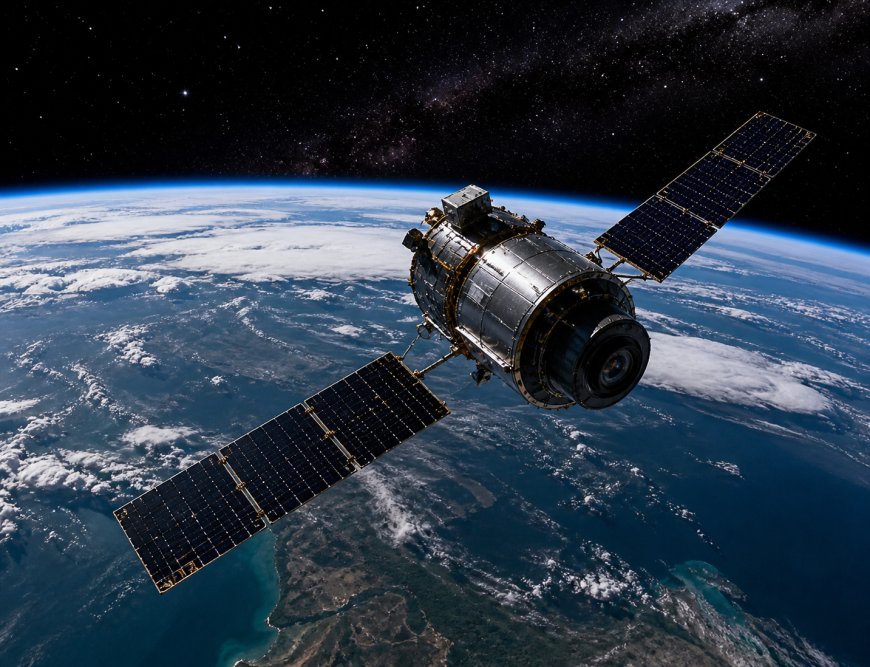


India’s private space sector has made history by launching a new satellite named Drishti, which was built by GalaxEye, an Indian startup based out of Bengaluru. Drishti was launched through a SpaceX Falcon 9 rocket from California on May 3, 2026. According to GalaxEye, Drishti is the first-of-its-kind OptoSAR satellite ever launched anywhere in the world. This is one of the most significant innovations in space technology, placing India in the league of nations developing advanced satellites.
What is Drishti and Why is it Special?
What makes Drishti distinctive is that it uses optical imaging and synthetic aperture radar (SAR) together on one satellite. Optical imaging gives clear imagery of our earth, whereas SAR makes use of radar beams to detect our earth despite any cloudy, rainy, foggy, smoky, or dark environment. Conventional satellites tend to have many limitations when faced with such environmental barriers; however, the innovative approach taken by Drishti makes it possible for it to function regardless of weather conditions at any hour of the day.
A Major Boost for India’s Space Industry
The successful launch of the satellite named “Drishti” marks a significant milestone for the private space industry in India. Over the decades, advancements in space were primarily carried out through ISRO; however, now there is no doubt that private sectors can come up with world-class innovations too. The accomplishment of GalaxEye demonstrates that Indian startups can design and launch satellites at par with other developed countries.
How Drishti Can Help in Real Life
Drishti can find applications in various aspects that will benefit governments, organizations, and the entire community. The satellite can be applied to border monitoring to enable security agencies to keep track of areas that may pose a threat to the country. It is useful in disaster situations like floods, cyclones, or landslides by supplying real-time images even through heavy cloud cover, allowing for quick relief operations. Its applications can include farming to ensure proper crop management, soil conditions, water sources, and other uses.
AI Technology Makes It Smarter
An additional advanced aspect of Drishti is the artificial intelligence (AI) that is built within the satellite. Rather than transmitting all the raw data to Earth to process the information, some data analysis can be done while the satellite is still in space. The reduction in time needed to transform visual data into actionable intelligence can prove advantageous during crises.
GalaxEye’s Future Vision
After the successful launch of Drishti, GalaxEye will be setting up an even bigger satellite network in the coming years. According to its plan, it would set up a constellation of 8-12 satellites in the next four years. With these satellites, high-resolution images with quick update rates are expected. This might give India an edge over other countries in the global market for satellite imagery data.
A Proud Moment for India
The development of the Drishti satellite is an excellent accomplishment by India. This shows that the Indian tech revolution is not only restricted to software and web services, but it is also making waves in the space industry all around the world. With the entry of many other private companies into the domain, India is gradually transforming itself into a hub of satellites and intelligent Earth observations.
What's Your Reaction?
 Like
0
Like
0
 Dislike
0
Dislike
0
 Love
0
Love
0
 Funny
0
Funny
0
 Angry
0
Angry
0
 Sad
0
Sad
0
 Wow
0
Wow
0